Approach
From the first conversation to something your team can run.
Every engagement follows the same shape: understand the system, prove the risky parts early, ship to production continuously, and leave behind software that can be operated by people who were not in the room when it was built.
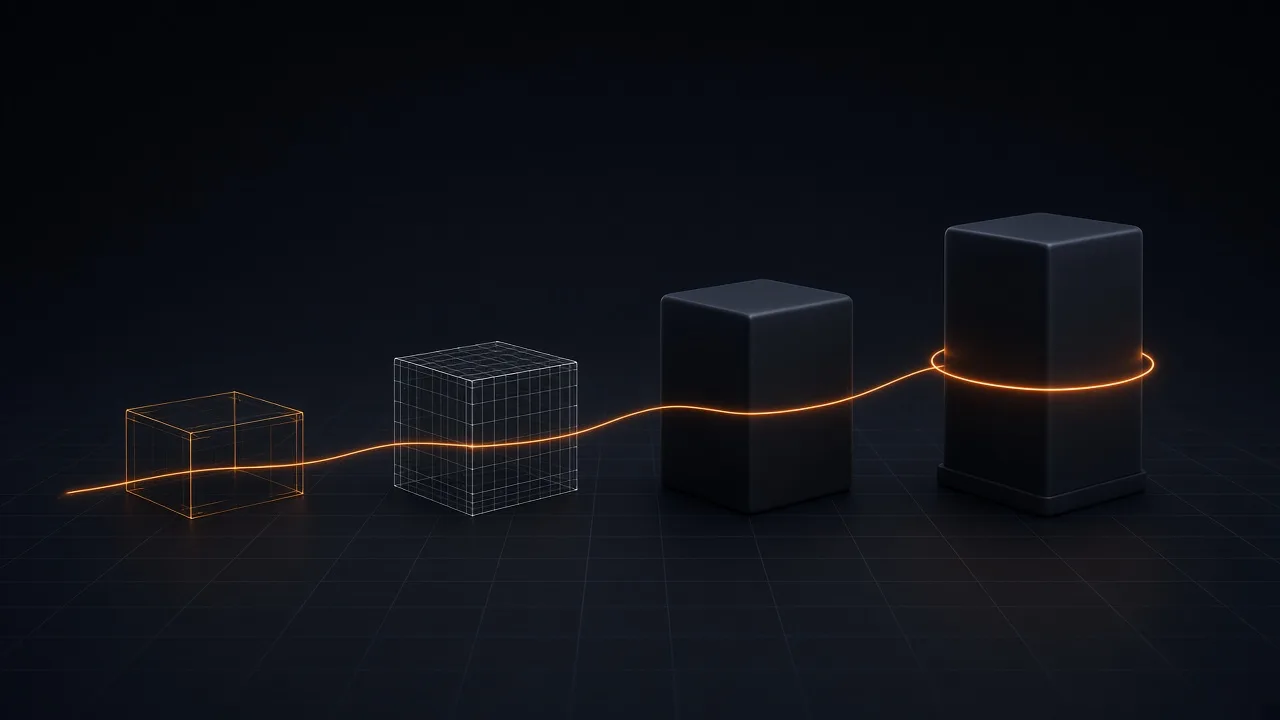
The four phases
Scope. Prototype. Ship. Run.
Phases overlap more than a diagram suggests, but the order of priorities does not change: clarity first, risk second, production always.
- 01
Scope
We start with the system that exists today, the people who use it, and what better looks like. Short technical discovery, honest constraints, and a scope we can both point at.
You get
- Problem statement
- System map
- Architecture outline
- Scoped first release
- 02
Prototype
The fastest way to validate a design is to put something in front of operators. We prototype the riskiest parts first—integrations, data models, the workflow that has to be right.
You get
- Working prototype
- Integration spikes
- Data model
- Interface direction
- 03
Ship
Production from the first sprint. Typed codebases, automated tests where they pay for themselves, CI/CD, and demos in the real environment instead of slide decks.
You get
- Production releases
- Documentation
- Admin tooling
- Runbooks
- 04
Run
Software that cannot be observed and handed off is unfinished. We instrument what we build, support the launch, and leave your team able to own it—or keep running it with you.
You get
- Observability
- On-call readiness
- Handoff or ongoing support
- Roadmap
Representative work
The kinds of systems we build.
Client details stay private. These composites describe the shape of recent engagements across operations, security, retail, and enterprise product teams.
Access control
Multi-site access management console
A single policy and credential layer across sites with different reader hardware, synced with the identity provider and exposing an audit trail security and compliance can both use.
- Policy engine
- Controller integrations
- SSO
- Audit
Operations tooling
Field operations dispatch and scheduling
Replaced a spreadsheet-and-text-message process with a dispatch board, mobile-friendly field views, and automatic status updates back to the CRM.
- Scheduling
- Mobile web
- CRM sync
- Notifications
Retail
Multi-location back-office integration layer
Connected point-of-sale, inventory, and finance systems through a central event pipeline so head office sees one consistent picture instead of four exports.
- Event pipeline
- POS
- Reconciliation
- Reporting
Enterprise product
Legacy platform rebuild, run in parallel
Modernized a business-critical internal platform module by module—new services behind the old interface—without a big-bang cutover or a pause in operations.
- Strangler migration
- Observability
- CI/CD
- Handoff
Engineering standards
Defaults on every system we ship.
Typed, boring, maintainable
TypeScript end to end, conventional stacks, and dependency discipline. Clever is a cost we try not to pay.
Production from week one
Environments, CI/CD, and deploy pipelines exist before the first feature. Nothing lives only on a laptop.
Observable by default
Structured logs, metrics, and tracing are part of the definition of done, not a follow-up project.
Security as a design input
Least-privilege access, audited actions, secret hygiene, and a threat model that matches the system's real exposure.
Documented for the next engineer
Architecture decisions, runbooks, and onboarding docs that mean your team can take over without us in the room.
Small senior teams
A few experienced engineers with direct access to the people who run the business. Specs stay short. Demos happen often.
Working stack
- Languages
- TypeScript · Node.js · SQL · Python where it earns its place
- Front end
- React · Next.js · Tailwind CSS · Accessible design systems
- Data
- PostgreSQL · Redis · Event streams · Object storage
- Platform
- Vercel · AWS · Cloudflare · Docker and IaC
- Operations
- OpenTelemetry · Structured logging · CI/CD · Secrets management
- AI
- Model-agnostic gateways · Retrieval pipelines · Evaluation harnesses · Human review loops
We choose conventional tools your team can hire for, and we will work inside an existing stack when that is the right call.
Get in touch
Want to see how this would apply to your system?
Send a short description of what exists today and what better looks like. We will respond with a technical point of view before anything else.