DevGroup

Services

Custom software, scoped to the system you actually need.

DevGroup covers the full arc of a product: discovery, architecture, build, launch, and the unglamorous work of running it well. These are the six areas where we do our best work.

01 / 06

Product engineering

We take a product from a defined problem to something real people log into every day. That means architecture decisions made with the next two years in mind, interfaces designed around how operators actually work, and a release process that keeps shipping after the launch announcement.

What it includes

  • Product definition and technical discovery
  • Full-stack web applications and admin consoles
  • REST and event-driven APIs with versioning and auth
  • Design systems and accessible, responsive interfaces
  • Release engineering, CI/CD, and environment strategy

A good fit when

Teams launching a first production version, or replacing a prototype that has outgrown itself.
Talk to us about product engineering
Layered application panels rendered in dark glass with amber highlights

02 / 06

Access control & security systems

Physical security is a software problem once you have more than one site. We build the management layer: who can go where, when, under which policy, with an audit trail that holds up. We integrate with readers, controllers, and identity providers instead of asking you to rip and replace.

What it includes

  • Credential and badge lifecycle management
  • Visitor and contractor flows with approvals
  • Zone, schedule, and role-based access policies
  • Controller and reader integrations, event ingestion
  • Audit logs, alerting, and compliance-ready reporting

A good fit when

Security and facilities teams running multi-site operations with mixed hardware and an identity system of record.

Talk to us about access control & security systems
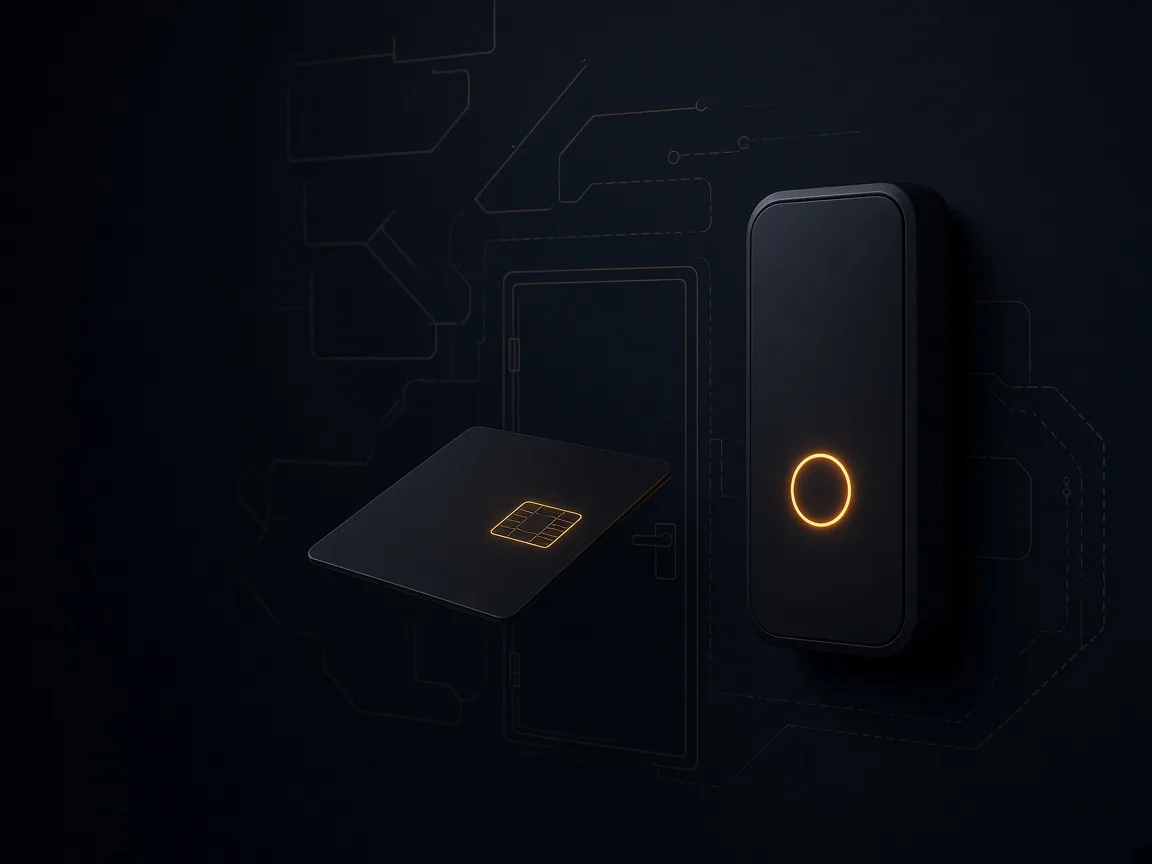
Matte-black badge reader with an amber status ring and an access card

03 / 06

Operations tooling & internal platforms

Every operation runs on a handful of workflows that never got real software. We encode how the business already works—approvals, scheduling, dispatch, inventory of work, reporting—and make the exceptions visible instead of hidden in someone's head.

What it includes

  • Workflow and approval engines
  • Scheduling, dispatch, and field-team tooling
  • Operational dashboards and reporting
  • Role-based admin surfaces and audit history
  • Data models that survive the next reorg

A good fit when

Operations leaders who know exactly what the process is and need software that respects it.

Talk to us about operations tooling & internal platforms
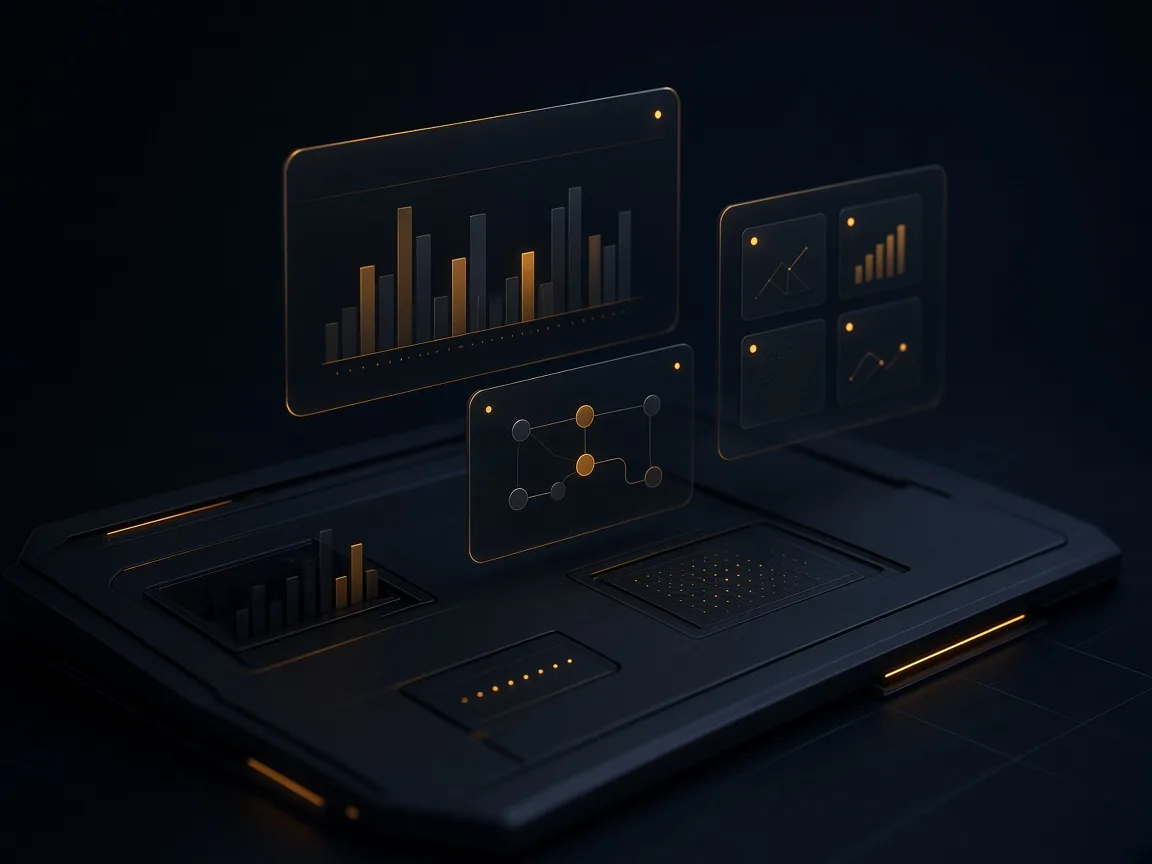
Dark control console with floating panels showing charts and a workflow diagram

04 / 06

Integrations & data movement

Most outages live at the seams. We treat integrations as products: idempotent, observable, retried on purpose, and documented. Whether it is a CRM sync, a billing bridge, a partner API, or an event pipeline, failure modes are part of the design rather than an afterthought.

What it includes

  • CRM, ERP, billing, and identity integrations
  • Webhook ingestion and outbound event delivery
  • Partner and vendor API development
  • ETL and reporting pipelines
  • Retry, dead-letter, and reconciliation tooling

A good fit when

Teams whose systems work individually but lose data, time, or trust between them.

Talk to us about integrations & data movement
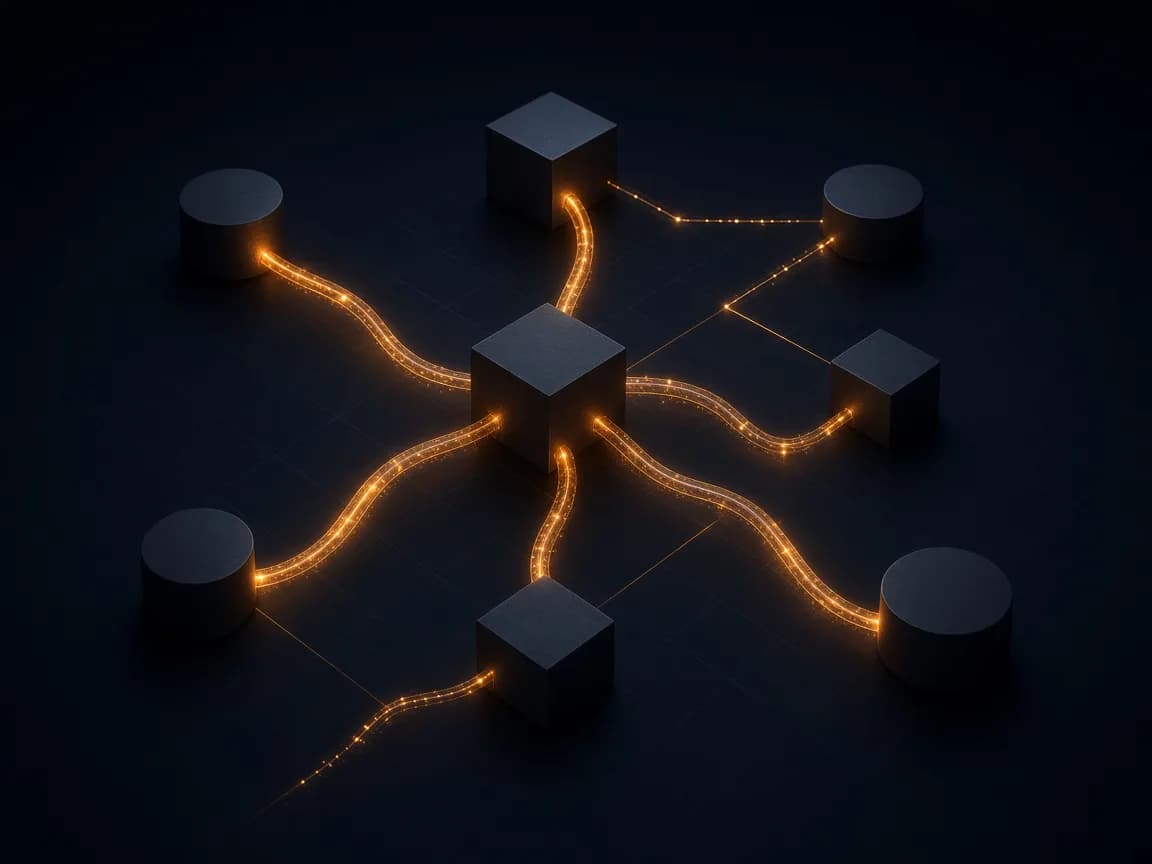
Isometric network of dark blocks connected by glowing amber data tubes

05 / 06

Applied AI

We put AI to work on specific, measurable tasks: drafting, classification, search across internal knowledge, and agent-assisted operations where the source of truth is known. Every deployment ships with an evaluation set, guardrails, and a review loop so the people accountable stay in control.

What it includes

  • Retrieval-augmented assistants over internal data
  • Classification, extraction, and triage pipelines
  • Agent workflows with tool use and approvals
  • Evaluation harnesses and quality monitoring
  • Cost, latency, and model-selection strategy

A good fit when

Organizations with real data and a repetitive, high-volume workflow that still needs human judgment.

Talk to us about applied ai
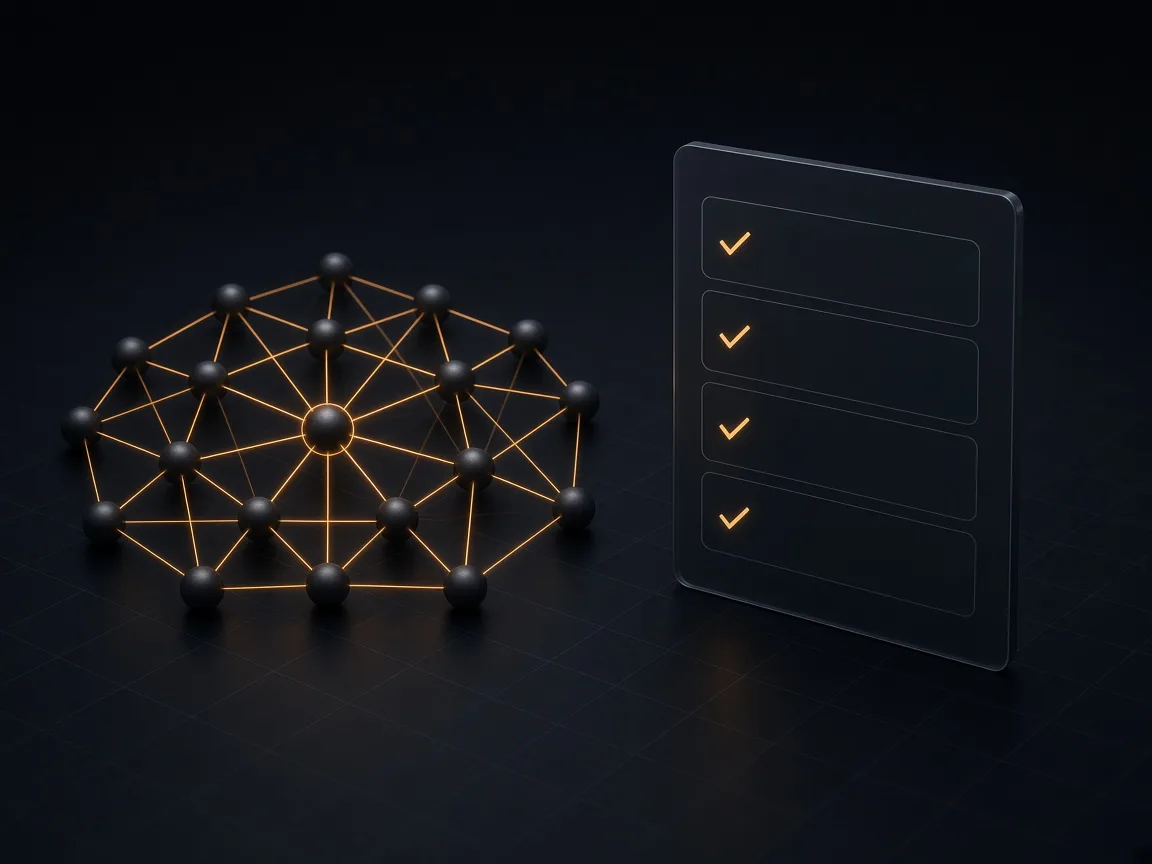
Lattice of connected nodes beside a glass panel with amber check marks

06 / 06

Reliability & modernization

An application that ships but is expensive to change is a liability. We stabilize the runtime first—deploy pipelines, observability, security posture—then incrementally modernize the architecture while the business keeps running on it.

What it includes

  • Observability: logs, metrics, tracing, and alerting
  • CI/CD and infrastructure as code
  • Security hardening and dependency hygiene
  • Incremental migration off legacy frameworks
  • Performance, cost, and capacity work

A good fit when

Teams inheriting a system that matters but was never built to be operated.

Talk to us about reliability & modernization
Row of dark server modules with amber status lights and a monitoring panel

Not sure which one?

Most real systems touch three or four of these.

An access control console is also an integration project and an operations tool. A legacy rebuild usually turns into a reliability engagement first. We scope around the outcome, not the category—so describe the problem and we will map it to the work. See how an engagement runs →

Get in touch

Describe the system. We will scope the work.

Bring the problem, the current stack, and the people who use it. We will come back with a technical point of view and a first release we can both commit to.